Technology

How Apple Pay Differs From Other Mobile Payment Services

You better get used to paying with your phone. It’s already a popular method of making purchases in places like Japan and even some countries in Africa, but in the United States it hasn’t caught on quite as quickly. While so-called tap-to-pay methods have been around for a number of years already, Apple’s recent announcement of their own mobile payment service, called Apple Pay, has sent a new wave of excitement through the technology community.

How Wearable Tech Can Turn the Internet of Things Into the Internet of You

You’ve probably heard of the Internet of Things (IoT) and how it’s set to completely transform the world. Some may view thguestis as an exaggerated take, but there’s little question that companies across the globe are taking an intense interest in it. The central concept of the IoT features tiny sensors and other machines that are all connected to the internet, allowing them to communicate with people as well as each other. Some experts are predicting that by the year 2020, there could be as many as 20 to 30 million items that are part of the Internet of Things.

Google Nexus 5 APN Settings for Consumer Cellular (Update)

What do we ask for? Consistency. What do we get from Consumer Cellular? More than a dozen ways to configure our Google Nexus 5 to their network. Unfortunately, many of those recommended settings don't work. Luckily, time is on our side. In the past 6 months Consumer Cellular and Nexus 5 owners have settled on APN settings that actually work properly on the Consumer Cellular network.

Opinion: Technology is no longer a disruptive force

When Google announced in 2012 that they were bringing Google Fiber to Kansas City, my father called me and said he was interested. As an information technologist, I was excited. I told the “old man” that Google Fiber was going to change everything. Last month, Google Fiber finally came to my parents' neighborhood, and I made the six-hour drive to visit the house I grew up in.

The Impact of Google Fiber in Kansas City

Google has already rolled out its fiber-optic technology for residents in specific areas of Kansas City – on both sides of the state line. High-speed Internet and TV services have come to many of the city’s “fiberhoods” – a neighborhood which has pre-registered for Google’s network in order to get its service.

Suite of Google Fiber EquipmentThe fiber has been installed in twelve areas of Kansas City, Kansas and in two areas of Kansas City, Missouri. The installation is in progress in many more areas of the Kansas City metropolitan.

I purchased the Google Nexus 7 tablet

If you follow me on Google+ or Twitter, you likely already know that I am not a tablet fan. I know the statement is contradictory when coming from a techy person like me. I have a hard time seeing the benefit of a tablet in my day to day life. I already own a great smartphone (the Android-based Droid Razr) and I prefer the ease of a physical keyboard on my computer and notebooks when writing content is crucial. Overall, I'm just not convinced that a tablet will allow me to do anything more than what my current devices already do. Perhaps this is a sign of my age, but I lost my "wow" some time ago for new technology.

Who really invented the tablet?

The 1994 Knight-Ridder video I attached at the bottom of this post  is a fantastic reminder that the tablet predates the iPad and Android tablet by many decades. During the "hypermedia" era of the late 1980's, I can recall taking a "tech of the future" class where my professor discussed in similar detail what a tablet might look like in the future. He described a day where students would be sitting under trees reading not from paper books but utilizing exactly what we know today as the digital tablet. 

 Believe it or not though, the origins of the tablet computer date back to the 19th century.

I do not like the word Smart

I was reading an article this morning regarding the use of ARM-based chips in a number of devices including "smartbooks". It appears the industry would like you to now call those smaller and less powerful laptop computers a smartbook instead of netbook.

To describe these devices as a smartbook is idiotic marketing for two reasons. First, "netbook" is a term that has been around for two years and most people today recognize the term being applied to smaller sized notebooks. When you hear the question, "What is a smartbook?" it seems very natural to just answer by replying, "a smartbook is a netbook". Secondly, I have to say it's very moronic (worse than ironic) to call a dumbed-down notebook a smartbook. At least when you say "smartphone" it is in reference to increased functionality over the traditional mobile phone and not less functionality.

I do not like the word "smart" being attached to devices and applications that are far from actually being intelligent on their own. Is marketing that insecure in the devices they're selling that they need to attach the word "smart" to cover up their own lack of intelligence? I have a theory that any time we attach the word "smart" to software or devices it is inviting doom into our lives.

Using the Palm Pre as a Wordpress server

Matt Mullenweg posted on his blog a link for how to install and run a Wordpress blog on a Palm Pre. We're not talking how to manage your Wordpress site using your cell phone as a client. Instead, we're talking about running Wordpress with the Palm Pre as the Web server. That's pretty impressive.

In ten or twenty years from now why couldn't you host your blog or personal CMS on a portable device? Could what appears to be a gimmick today actually be the future for Web applications? I don't think it's that far fetch of an idea as many might think...

Dell releasing the Mini 12 netbook this week?

Last year, I started looking for a linux laptop and ended up just migrating my old Windows laptop over to Ubuntu Linux.  Since my personal preference is for smaller sized laptops, I have also been keeping an eye on the new low-cost netbooks.  Currently, I'm leaning toward the Dell Inspiron Mini 9 with Ubuntu already installed.  However, my personal sweet spot for a laptop seems to be in the 10 to 12 inch range.

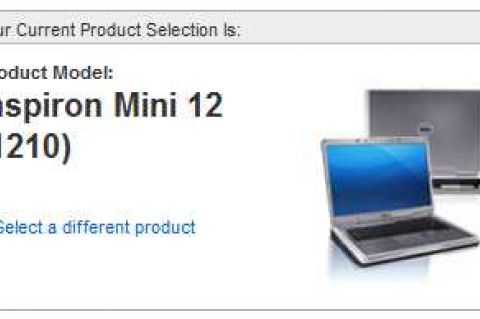
Today, at Dell.com I came across reference to a yet to be released Inspiron Mini 12 (1210)!  While there have been rumors circulating on the Web that Dell will be introducing a 12.1 inch Mini netbook or (and) E Slim, I don't think anyone has reported seeing actual references of the Inspiron Mini 12 at Dell.com.  Until now!  Perhaps we'll be seeing the Inspiron Mini 12 released this week or possibly next week?  If the price is reasonable and Ubuntu is available, this Mini 12 will be my next notebook.